Hardeness - 7.5 - 8
Blue, transparent, like the clear waters of the sea on a calm day – this is aquamarine, one of the most distinguished varieties of natural gemstones. It has served many generations across different cultures. Its unique properties made it a coveted talisman for monarchs, sages, and sailors alike.
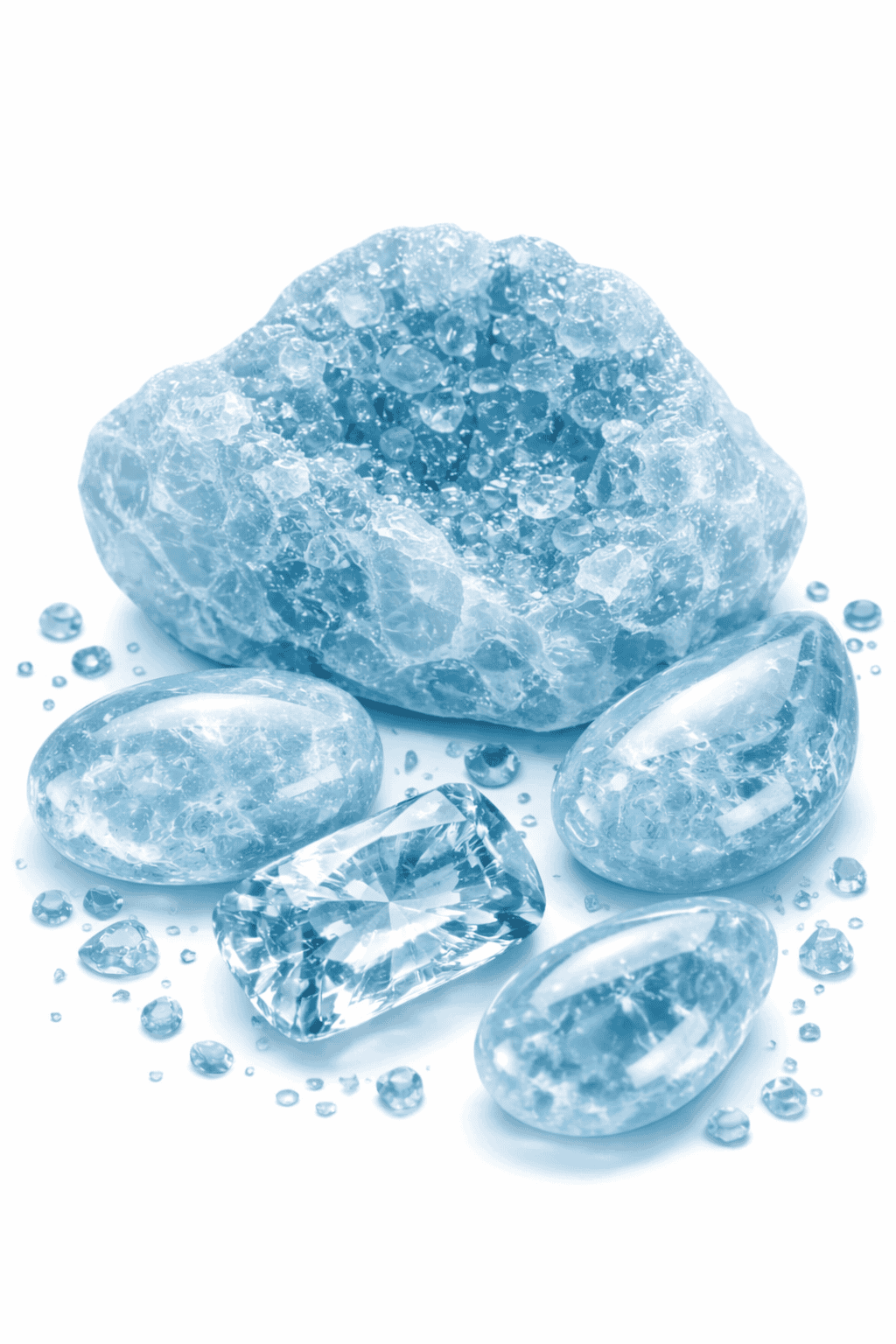
Aquamarine is a greenish-blue variety of beryl. Stones in the beryl group are known for their rich chromium content and striking colors. The word “aquamarine” comes from the Latin term for “sea water.”
Aquamarine exists in several variations:
Transparent aquamarine – the most valuable type.
Included or semi-transparent varieties – comparatively less expensive.
Although aquamarine is often referred to only as a transparent stone, semi-transparent varieties are equally beautiful and remain popular among buyers.
In ancient Greece, it was believed that the blue beryl carried the spirit of the water element. Legends say that those who wore aquamarine as a talisman were under the protection of the god Poseidon. Such individuals were immune to sea illnesses, could calm the waves, and safely navigate deep waters.
In ancient China, aquamarine was highly valued for its transparency. It was used in the production of lenses, optical devices, spectacles, and magnifying glasses. It was believed that wearing the stone enhanced perception and allowed the wearer to see hidden details.
In Europe, aquamarine rings became popular among seers and magicians, as they were thought to enhance prophetic powers, protect against deceit, and demand honesty from their wearer.
In the 16th–17th centuries, a large 920-carat aquamarine adorned the crown of Britain, a symbol of maritime power. Even after centuries, aquamarine remained a symbol of authority and influence.
Many ancient cultures believed aquamarine carried the energy of the ocean, helping its wearer connect with nature. Sailors always carried it to ensure safe journeys. It was said that the stone changed color when a storm approached.
Aquamarine is believed to help with:
Overcoming personal complexes
Expressing thoughts freely
Enhancing concentration (students, pupils, and working professionals)
Calming overly critical or judgmental tendencies
Natural aquamarine always contains small rounded bubbles from air inclusions.
Cobalt-based dyes used in imitations turn red under UV light.
Natural aquamarine changes hue when viewed from different angles.
Cabochon cuts may display asterism or the “cat’s eye” effect.
Aquamarine can be distinguished from topaz by its inclusions, such as chrysanthemum or snowflake patterns.
Semi-precious aquamarine is often cut in step cuts or emerald cuts, while smooth, semi-round cabochons remain popular. Prolonged sunlight can turn the stone’s blue or green hue yellow or brown, especially in vivid Brazilian aquamarines.
Protects the wearer from evil or negative influences
Calms the nervous system
Associated with the 5th chakra in Indian philosophy – emotional stability
Supports detoxification, treats allergies, skin conditions, respiratory problems, and thyroid issues
Water signs (Cancer, Pisces, Scorpio) – helps in difficult situations, enhances emotional resilience
Air signs (Libra) – maintains balance
Earth signs (Virgo, Taurus, Capricorn) – boosts energy and vitality
Fire signs – not recommended
Aquamarine’s properties are enhanced when combined with silver or diamonds. In China, this combination is known as the “Reflection of Stars in Water.”
 511 40 73 13
 info@silveria.ge


 Eng
Eng