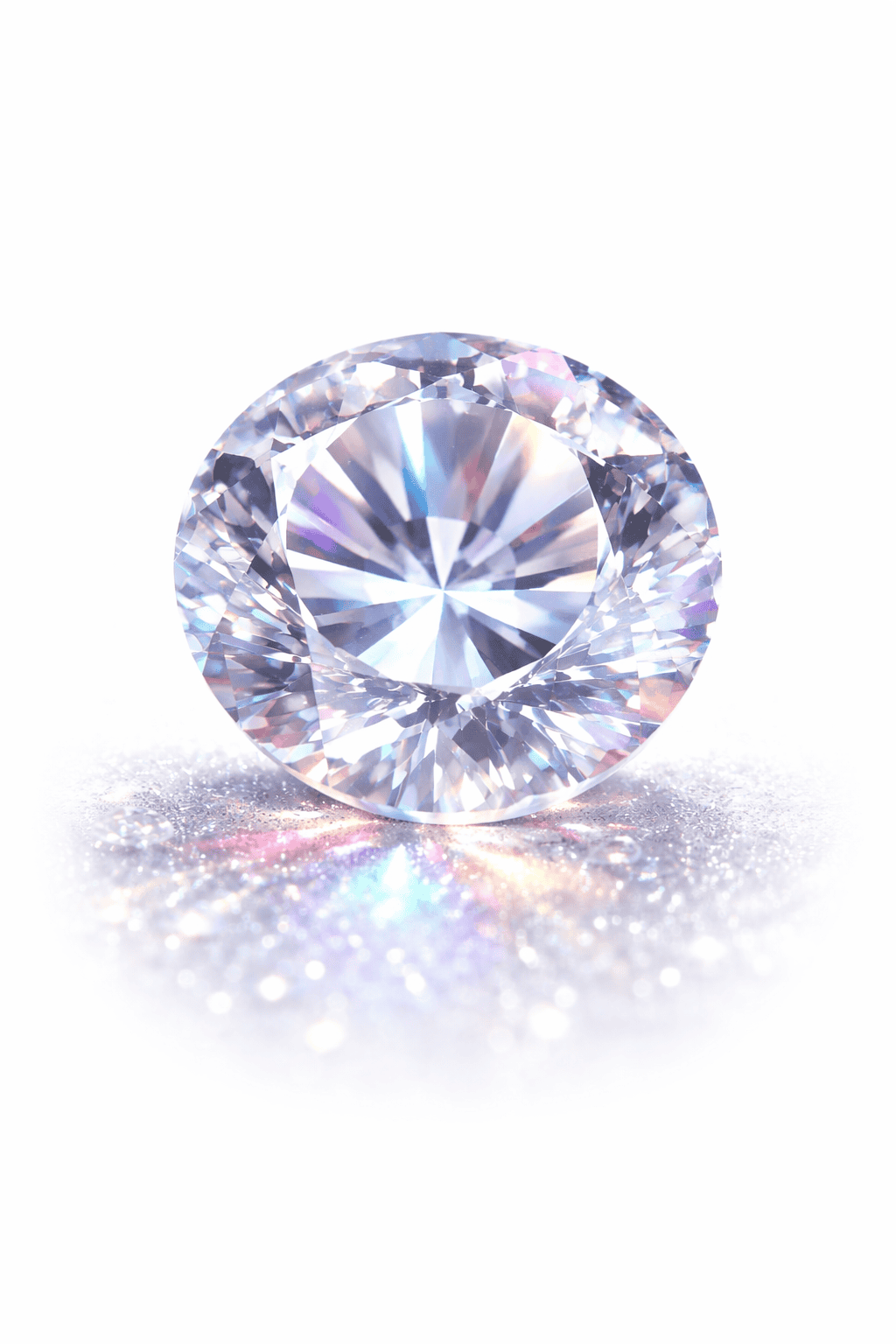
Swarovski Crystals
Swarovski crystals are not natural stones; they are handcrafted crystals created using the exclusive technology of a world-renowned brand. In other words, they are a remarkable imitation of natural diamonds.
How Were They Created?
The crystals are named after the Austrian engineer Daniel Swarovski, their inventor. At the beginning of his career, each crystal was crafted by hand. With the advancement of global technology, he was able to improve his process significantly.
In 1889, Daniel Swarovski visited the World Fair in Paris, where he first saw the Eiffel Tower and the latest electrotechnical devices. Upon returning home, he created the first electronic machine that cut crystals with perfect precision. This marked the beginning of Swarovski crystals’ journey to captivate the world.
What Distinguishes Swarovski Crystals from Other Minerals?
Special diamond-cutting technique
Perfect straight edges and smooth facets
Brilliant, shifting sparkle
High quality
Strict quality control to eliminate “defective” pieces
Affordable price
Versatile usage
What Are These Crystals Made Of?
The exact composition is a family and commercial secret protected by Swarovski. However, it is known that their components include:
Solid glass (the crystal)
Sand
Soda
Zinc oxide and other additives
Over time, leading engineers refined the technology and completely removed zinc from the crystal-making process.
Swarovski Crystals vs. Cubic Zirconia (CZ)
Cubic zirconia is an artificial mineral originally created in Moscow using a special method. After entering serial production, Swarovski specialists worked on additional cutting techniques, making cubic zirconia nearly identical to a diamond. Swarovski cubic zirconia is distinguished by:
Recognition as a diamond lookalike
Affordable price
Increased facet precision (up to 57° and beyond)
Exceptional visual brilliance
One-third greater internal sparkle and light dispersion
Enhanced durability and strength
Longer lifespan
Swarovski crystals are widely used in the jewelry industry, as well as in accessories, figurines, and other decorative items.
What You Should Know About Swarovski Crystals:
Facets should not be less than 14°
Each side should be perfectly straight, without micro-cracks
The back side is slightly silver-colored, enhancing sparkle (this effect was originally achieved using zinc)
Crystals have laser engraving
Genuine crystals are always precise and free of defects
Country of origin is always Austria
Care Instructions:
Crystals can lose their sparkle due to water, perfume, creams, and household chemicals
Jewelry should be stored separately to prevent crystals from scratching each other
Clean with a soft cloth or velvet tissue, carefully
Do not use alcohol or cleaning agents
Their beauty is truly enchanting and will enhance any woman’s elegance.
 511 40 73 13
 info@silveria.ge


 Eng
Eng