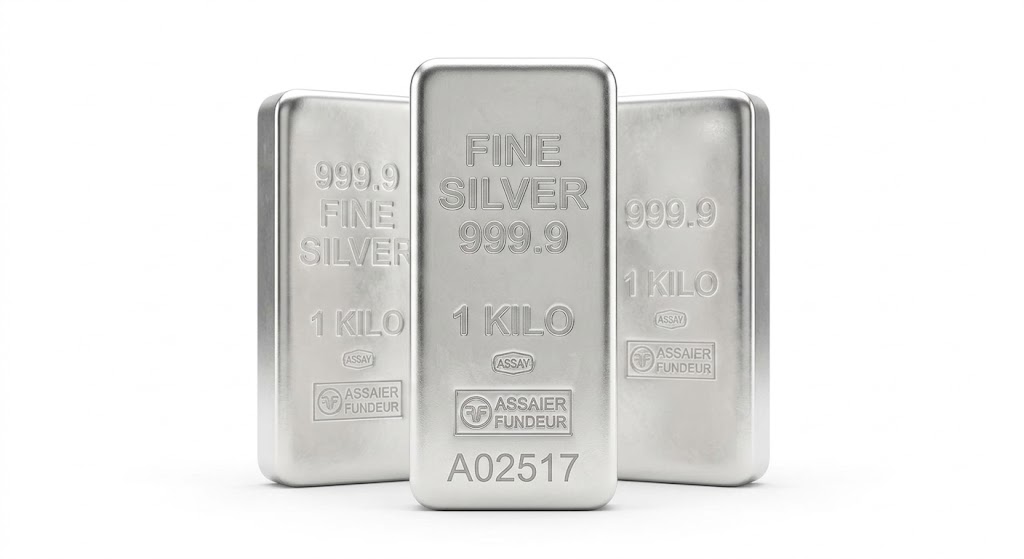
Practice has shown us that silver is one of the most "alive" and expressive metals. Unlike gold, it possesses its own distinct character, reacting to the environment and even to the wearer's skin type, requiring a true understanding of its nature.
Unfortunately, the market today is flooded with misinformation that leads buyers astray. Let’s take a look at the journey of silver—from the mines to the ring on your finger—through the eyes of a practicing master jeweler.
Humanity has known silver for over 6,000 years. In ancient times, it was often valued even higher than gold because it was found less frequently in its pure, elemental state in nature.
Today, silver is primarily mined in countries such as Mexico, Peru, and China. However, pure silver (.999 fine silver) is exceptionally soft—bending almost like modeling clay. Because of this, pure silver is rarely used to make jewelry, as it is highly impractical for daily wear.
To give silver durability, we alloy it with other metals (primarily copper). This creates 925 Sterling Silver, meaning the alloy consists of 92.5% pure silver and 7.5% hardening metals.
How does it become a finished piece?
Casting: We melt the silver alloy at 961.8°C and pour it into specialized plaster molds.
Crafting and Texturing: The cast components are hand-filed, shaped, and gemstones are set with microscopic precision.
Polishing: The piece undergoes polishing to achieve a mirror-like shine.
Final Plating: Which brings us to the most critical and often debated topic!
Buyers often mistakenly assume that if silver tarnishes, it is low quality. This is one of the biggest myths in jewelry! Silver oxidation (tarnishing) is a completely natural chemical reaction caused by sulfur present in the air and human perspiration.
To protect the metal and alter its appearance, jewelers apply various protective coatings. In practice, the single best choice is rhodium plating.
A) Rhodium Plating — The Superior Choice
Rhodium is a precious metal from the platinum family that is significantly more valuable than gold.
How it works: A thin layer of rhodium is electrochemically applied over the silver piece.
The result: The jewelry takes on a bright white-gold aesthetic, does not tarnish, and becomes far more scratch-resistant.
Longevity in practice: On a ring worn daily, rhodium plating lasts 1 to 2 years. On earrings and pendants—which experience far less friction—it can last 3 to 5 years. Once worn down, it can easily be re-plated by a jeweler.
B) Gold Plating — Temporary Beauty
How it works: A thin layer of 18K or 24K gold is applied over the silver base.
The result: You achieve the luxurious look of gold at a fraction of the cost.
Longevity in practice: On rings and bracelets exposed to water and friction, gold plating lasts 3 to 6 months. On earrings and pendants, it can last 1 to 2 years.
Master’s Tip: If you wear the piece daily, expect to re-plate it periodically.
C) Silver Plating — Unnecessary Expense
The reality: Plating 925 sterling silver with pure silver (.999) achieves virtually nothing. It will still tarnish over time and require the exact same maintenance as unplated silver. This technique is intended for base metal costume jewelry and is a pointless expense for real sterling silver.
If your silver piece is unplated 925 sterling silver, follow these simple rules:
Avoid chemicals: Always remove silver before swimming in pools (chlorine) or the ocean (salts), showering, or applying perfumes and lotions.
Storage: Store pieces in a dry location, preferably inside a soft cloth pouch or an airtight jewelry box to minimize contact with air.
At-home cleaning:
Never use dry baking soda or toothpaste! They act as abrasive particles that leave micro-scratches, permanently ruining the luster.
The correct method: Soak the piece in warm, soapy water for 10 minutes, gently scrub with a soft-bristled toothbrush, and dry thoroughly with a microfiber cloth.
Professional care: Once a year, bring your jewelry to a professional master for ultrasonic cleaning and re-polishing.
To maintain a flawless, tarnish-free look for years without hassle, choose rhodium-plated silver. If you prefer the classic, natural patina of traditional silver, simply practice proper care!
 511 40 73 13
 info@silveria.ge


 Eng
Eng