Gold is the most coveted and stable metal in human history, yet most customers still have many questions: "What is the difference between 585 and 750 fineness?", "Is white gold natural or painted?", "Which color is the most durable?", "Which country's gold is best?"
Let’s look at the journey of gold—from the mine to your display case—through the eyes of a practicing master jeweler.
Humanity has known gold for over 7,000 years. It is one of the rare metals found in nature in its pure state, as nuggets or other natural formations.
However, pure gold (.999 fine / 24 Karat) is so soft that you can scratch it with a fingernail or bend it with your fingers. Therefore, when purchasing or commissioning jewelry made of pure gold, do not be surprised if it deforms over time.
To give gold the necessary strength, we alloy it with other metals (copper, silver, palladium, nickel, zinc). This mixture is called an alloying agent (ligature).
585 Fineness (14K): Consists of 58.5% pure gold and 41.5% supporting metals.
The most common choice! It is extremely durable, highly scratch-resistant, and ideal for everyday jewelry. It is also more budget-friendly compared to higher karats.
750 Fineness (18K): Consists of 75% pure gold and 25% alloys.
Premium quality. It features a richer, more vivid yellow color. While slightly softer than 14K, it is frequently chosen for setting diamonds.
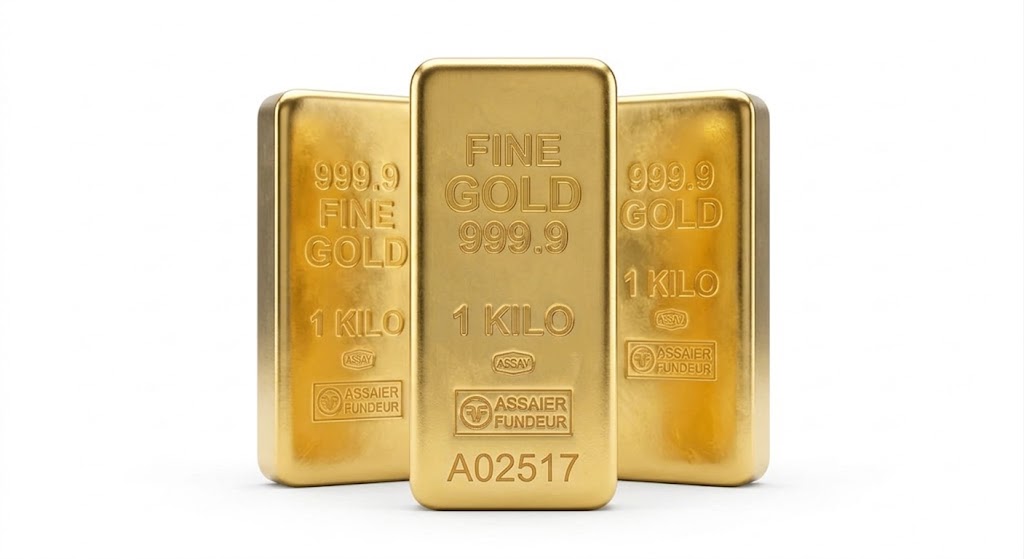
916 / 999 Fineness (22K / 24K): Near-pure gold. It is used for investment bars and coins, but very rarely for everyday jewelry (primarily found in Asian cultures, wedding bands, etc.).
In nature, gold exists exclusively as yellow. All other colors are created by carefully selecting the right alloying agents.
Yellow Gold: A blend of pure gold, silver, and a small amount of copper. It retains its natural, warm hue.
Rose and Red Gold: Created by increasing the proportion of copper in the alloy. The higher the copper content, the redder the shade. Copper also adds extra durability to the piece.
White Gold: Created by blending gold with white metals—such as palladium, silver, or nickel.
White gold naturally carries a slight yellowish-grey tint. To achieve a bright, mirror-like white luster, we always plate it with rhodium!
Unlike silver, which oxidizes and blackens in the air, gold is chemically very stable and will never turn black. However, over time, it can lose its brilliance due to oils, creams, and surface scratches.
Avoid Chlorine: Chlorinated pool water is the greatest enemy of gold alloys (especially 14K)—it can damage the alloy structure and loosen stone settings.
At-Home Cleaning: Soak the piece in warm, soapy water (you may add a few drops of household ammonia), gently scrub with a soft-bristled toothbrush, and dry thoroughly.
Refreshing White Gold: If your white gold piece develops a slight yellowish tint after 1–2 years, don't worry—this simply means the protective rhodium layer has worn down. Bring it to a jeweler, and after re-rhodium plating, it will shine like new again.
One of the most widespread myths, existing for decades in the post-Soviet space, revolves around origin. Customers frequently ask: "Which gold is better — Russian, Italian, or Turkish?"
As a practicing jeweler, I will tell you directly: Gold has no nationality.
Purity is the same everywhere: 585 fineness (14K) gold in Russia, Italy, or America contains exactly 585 milligrams of pure gold per gram. In terms of gold purity, there is no difference whatsoever.
Where did this myth come from? In the Soviet Union, manufacturers primarily produced gold with a reddish hue (high copper content), which people nicknamed "Russian gold." In Europe (including Italy), preference was given to lemon-yellow gold (where more silver than copper is added).
The real quality difference: The difference lies not in the country of origin, but in the manufacturing technology and structural density. Italy is a jewelry industry giant renowned for exquisite designs and modern technology; however, their pieces are often hollow and thin-walled, making them more delicate. "Russian" pieces were historically made solid, heavier, and thicker-walled.
Verdict: Do not evaluate gold by country. Pay attention to the hallmark stamp, the item's total weight, wall thickness, and seam quality!
 511 40 73 13
 info@silveria.ge


 Eng
Eng