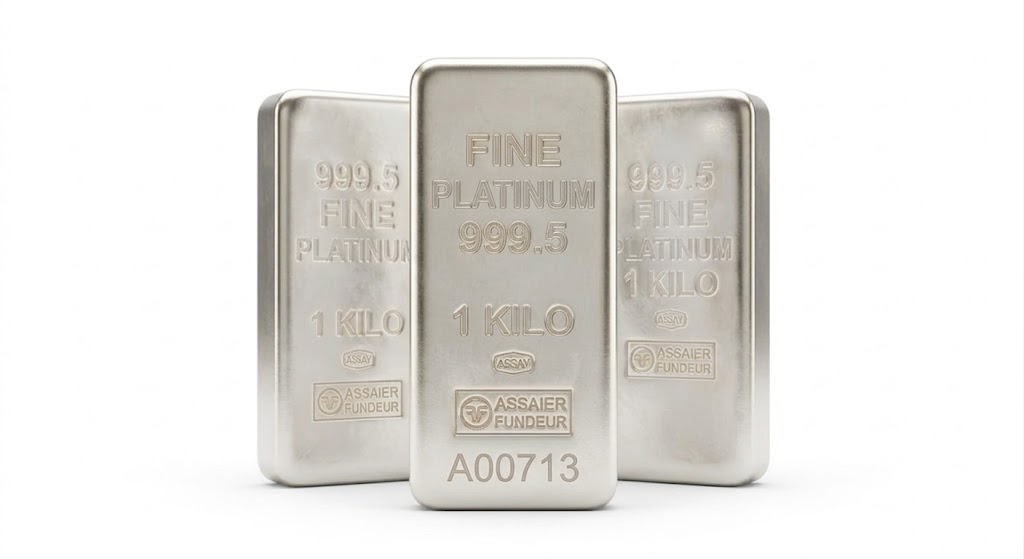
After silver and gold, the third "giant" upon which the jewelry world stands is platinum. As a practicing master jeweler, I describe this as an "engineering" metal—it is difficult to work with, but the results are astonishing. Platinum represents the highest league, both in price and performance. Many consumers confuse it with white gold, which is a major mistake; we will compare these two in detail later.
Let’s look at this unique metal—from its nature to your finished jewelry—through the eyes of a practicing artisan.
Platinum became known to humanity much later than gold and silver. Although it was used in ancient Egypt, Europeans only "discovered" it in South America during the 18th century. They initially named it "platina" (Spanish for "little silver") because they confused it with silver and could not melt it (platinum's melting point is a staggering 1768°C, compared to gold's 1064°C), thus considering it useless.
Today, platinum is one of the rarest metals in the world. Its primary extraction occurs in South Africa and Russia. Imagine the scale: several tons of ore must be mined to obtain just a few grams of platinum. This scarcity, combined with the difficulty of extraction and processing, determines its high price.
Bold Facts to Astound You:
Fact 1: "Imagine if all the platinum mined throughout human history were placed in a single room; it would only reach your ankles. Gold, on the other hand, would fill several large buildings."
Fact 2 (Production): "The creation of a single platinum ring, from mine to display case, takes between 5 to 8 weeks, as its processing requires exceptional craftsmanship from the jeweler and specialized tools."
Here lies a main difference from gold alloys:
Jewelry Platinum (.950 Fine): The alloy is 95% pure platinum and only 5% other metals (usually iridium or ruthenium).
Master’s Review: Hypoallergenic and Heavy. Because platinum is 95% pure, it practically never causes allergies. Furthermore, it is very dense; a platinum ring feels significantly heavier than an 18K gold ring of the same size.
In practice, .950 fine is the most common, though .900 fine is occasionally found.
Natural Color: Platinum is naturally white with a slight silvery-grey tint. It does not require rhodium plating like white gold. Its color is eternal.
Durability: It does not wear away. While a gold ring thins over time, a platinum ring loses no mass. Scratches on platinum do not "remove" metal but merely "shift" it (developing a "patina"), which actually makes its surface denser.
Scratches as Nobility:
Many customers fear scratches, but with platinum, we turn this fear into an advantage.
"Do not fear scratches on platinum. A scratch on gold means you have lost metal. A scratch on platinum means the metal has simply shifted. Over the years, platinum jewelry acquires a characteristic 'matte luster' (Patina), which many jewelers value more than a new, polished surface. This patina is the history of the jewelry on your hand."
Security for Gemstones: Platinum's strength makes it ideal for setting diamonds and other precious gems. Platinum prongs do not bend or snap, minimizing the risk of losing a stone.
Platinum — A Diamond's Best Friend:
"If you are purchasing a large, clean diamond, a platinum setting is the best choice. Not only because it will hold the stone most securely, but because platinum's eternal white color will not 'tint' the diamond with a yellow hue (as yellow gold does), allowing the stone to appear larger and more brilliant."
Platinum is chemically very stable. It does not react to chlorine or household chemicals, making it safe to wear in the shower or pool (though it is still best to avoid due to the gemstones).
Polishing: If you wish for your platinum jewelry to shine "like a mirror" again, bring it to a jeweler for polishing. Polishing platinum is a complex process, but it restores its original appearance.
At-Home Cleaning: Soak the piece in warm, soapy water, gently scrub with a soft brush, and dry. Platinum will not tarnish, so cleaning is only needed to remove dirt.
This is the most frequent question. We must show the customer why platinum is worth the premium.
| Characteristic | Platinum (.950 Fine) | White Gold (14K or 18K) |
| Natural Color | Eternal White (slightly greyish). | Yellowish-grey (in its natural state). |
| Requires Plating? | No. Color will never change. | Yes. Needs Rhodium Plating for brightness. |
| Durability & Wear | Extraordinary. Loses no mass; scratches create a patina. | Good, but wears over time; requires re-plating. |
| Weight | Heavy. Feels significantly heavier in hand. | Light. (In comparison to platinum). |
| Allergy Risk | Hypoallergenic. Ideal for sensitive skin. | May cause reactions if nickel is used in alloy. |
| Price | Highest. (Due to scarcity and processing). | More Budget-friendly. |
Artisan’s Emotional Emphasis: "If white gold is a beautiful dress that periodically requires dry cleaning (rhodium plating), platinum is skin that is always with you and ages alongside you."
If you are looking for an "eternal" piece of jewelry to pass down through generations, with color that will never change, platinum is the ultimate choice. It is the symbol of strength, scarcity, and supreme quality.
If you want eternal quality, wear platinum!
 511 40 73 13
 info@silveria.ge


 Eng
Eng