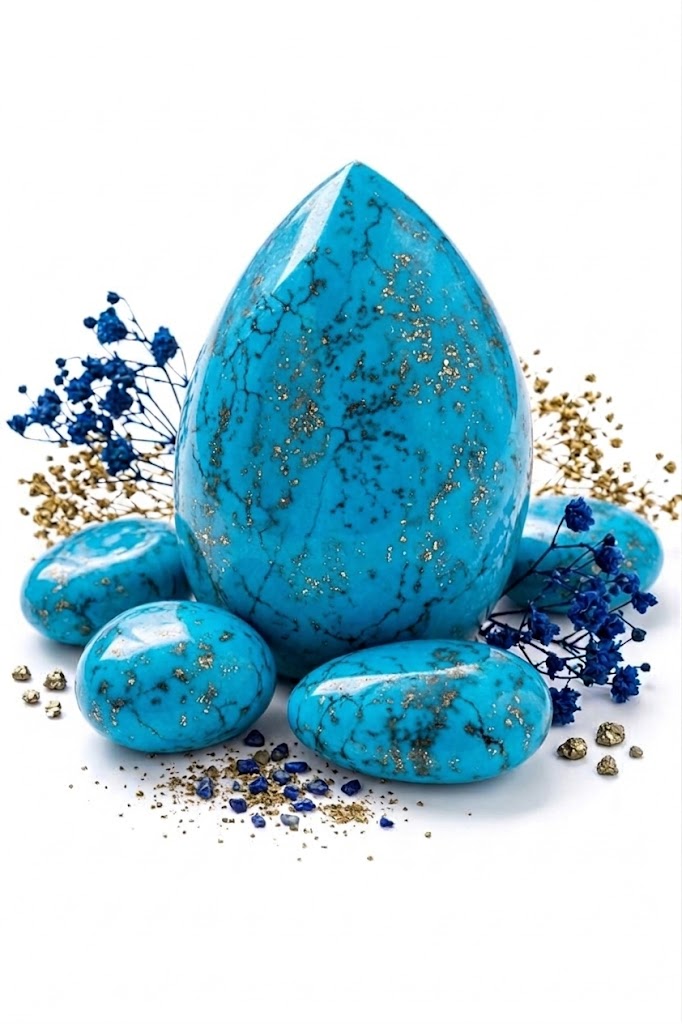
In the jewelry world, Turquoise is one of the most recognizable, ancient, and beloved gemstones. Renowned for its signature robin’s-egg blue, cyan, and greenish hues, it holds a legendary status in ethnic, bohemian, and fine sterling silver jewelry.
Often called the "Living Stone," turquoise is uniquely porous and responsive to its environment. Let's explore its history, folklore, gemological properties, and essential care guidelines through the eyes of a master jeweler.
Turquoise is among the first gemstones ever mined, revered for millennia as a talisman of protection, victory, and health.
Origins & Mines: The finest historic sky-blue turquoise hails from Iran (Nishapur mines). Other premier sources include Arizona, USA (e.g., the famous "Sleeping Beauty" mine), Egypt's Sinai Peninsula, and China.
Etymology: The word "Turquoise" dates back to the 17th century, derived from the French turquois ("Turkish"), as the stone reached Europe via Turkish trade routes.
Myths & Legends:
The Indicator of Health: Medieval lore claimed that turquoise was a living mirror of its owner's well-being. If the stone faded, dulled, or turned green, it warned of impending illness or danger.
The Warrior’s Shield: Aztecs, Persians, and Native American tribes adorned their weapons, shields, and ceremonial attire with turquoise, believing it prevented falls from horseback and guided arrows straight to their targets.
Symbol of Fidelity: In Eastern cultures, turquoise rings were exchanged as tokens of enduring love. It was believed that if affection waned, the stone's vibrant blue would fade away.
Turquoise is a hydrated phosphate of copper and aluminum.
Color Dynamics:
Copper: Imparts the highly prized, vivid sky-blue color.
Iron: Higher iron content shifts the stone’s hue toward apple-green or olive tones.
Matrix Lines: Web-like black, brown, or golden veins running through the stone are remnants of the host rock. Highly symmetrical patterns are treasured as "Spiderweb Turquoise."
Processing: Registering a 5 to 6 on the Mohs scale, turquoise is relatively soft and porous. Bench jewelers shape it into smooth cabochons, beads, or mosaic inlays rather than faceting it.
Pros:
Unmistakable Aesthetic: Pairs exceptionally well with sterling silver and oxidized metal, offering a rich cultural flair.
Deep Symbolism: Highly cherished as a stone of peace, protection, and good fortune.
Cons:
High Porosity: Absorbs oils, sweat, cosmetics, and moisture, which can permanently alter its color from blue to dull green.
Soft & Fragile: Prone to surface scratching and damage from sudden impacts.
Keep Away from Moisture & Chemicals: Remove turquoise jewelry before washing hands, showering, swimming, or applying lotions.
Avoid Direct Perfume: Alcohol and essential oils in perfumes easily penetrate the stone, causing discoloration.
Cleaning: Gently wipe with a dry, soft micro-fiber cloth. Never submerge in liquid or use ultrasonic cleaners.
Storage: Store in a cool, dark place inside a soft fabric pouch, away from direct sunlight, which can dry out and fade the stone.
Turquoise is one of the most heavily imitated stones on the market. Buyers frequently encounter dyed plastics, reconstituted powders, or dyed Howlite (a naturally white, veined mineral).
How to Spot Genuine Turquoise:
Thermal Feel: Natural turquoise feels cool to the touch initially, whereas plastic imitations warm up instantly.
Vein Inspection: Examine the matrix lines with a jeweler's loupe. On dyed howlite, paint accumulates heavily inside the cracks, creating dark artificial bleeding.
Stabilized Turquoise: Top-grade, untreated sky-blue raw turquoise is exceedingly rare. In fine jewelry, artisans routinely use stabilized turquoise—genuine stone infused with clear resin to harden it and seal its pores. This is an accepted industry practice that preserves the stone's vivid blue against everyday oils!
 511 40 73 13
 info@silveria.ge


 Eng
Eng